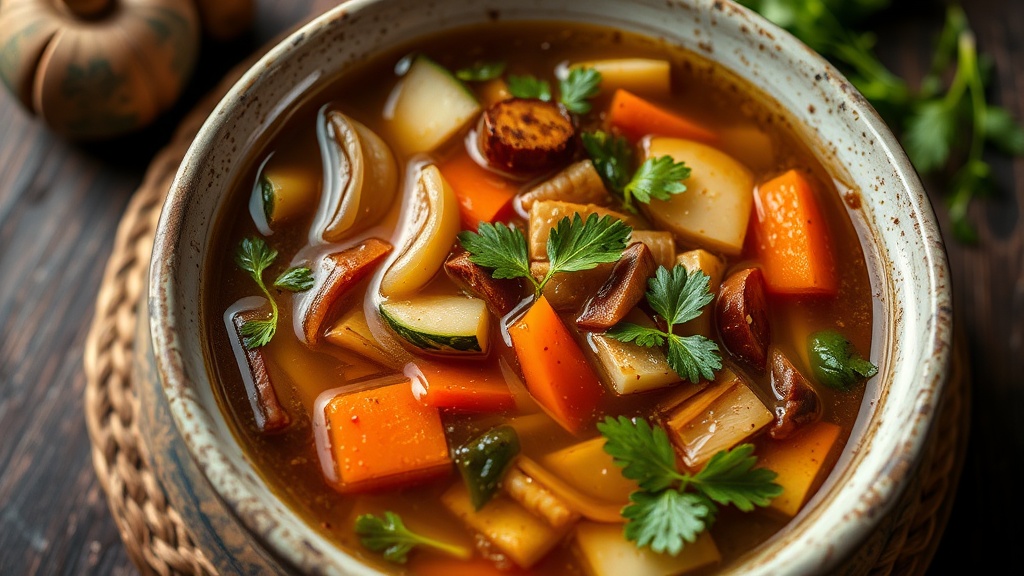
Transforming Leftover Scraps into Flavorful Homemade Vegetable Broth

Most people believe that high-quality vegetable broth requires a trip to a specialty grocer to buy expensive, pre-packaged organic cartons. They see the $5 or $6 price tag on a 32-ounce container of "low sodium vegetable stock" and assume that is the only way to get a clean, nutrient-dense base for their soups and stews. This is a mathematical error. You are paying for packaging, shipping, and a corporate markup. In reality, the most nutrient-dense, flavorful broth is currently sitting in your trash bin in the form of onion skins, carrot tops, and celery ends. Making your own broth isn't just a "lifestyle hack"; it is a fundamental way to reclaim the value of every dollar you spend at the grocery store.
The Economics of the "Scrap" Method
Let’s look at the math. If you buy a bag of carrots from a store like Aldi or Trader Joe's, you are paying for the entire vegetable, but you are only consuming the root. The green tops and the outer peel are often discarded. By collecting these "waste" products, you are effectively lowering your cost-per-serving of liquid base to nearly zero. Instead of buying a box of broth that is often loaded with yeast extract or excessive salt to mimic flavor, you are creating a customized, whole-food liquid that fits your specific nutritional needs.
When you make broth from scraps, you are engaging in a form of micro-budgeting. If a recipe calls for two cups of broth, and you have to buy a new carton every time you run out, that cost adds up over a month. By utilizing the parts of the produce you already paid for, you are maximizing your return on investment (ROI) for every grocery trip.
What to Collect: The "Yes" and "No" Lists
Success in making vegetable broth depends entirely on your inventory. You cannot just throw any organic matter into a pot and expect a culinary masterpiece. You need to be intentional about what goes into your "scrap bag" or container in the freezer.
The High-Value Ingredients (The "Yes" List)
- Onion Skins and Ends: These provide deep color and a foundational sweetness. The papery outer skins are particularly good for a golden hue.
- Carrot Tops and Peels: The green tops add an earthy, herbaceous note, while the peels provide sweetness.
- Celery Bases: The bottom inch of the celery stalk, where the leaves are attached, holds a massive amount of aromatic flavor.
- Leek Greens: The dark green tops of a leek are often discarded, but they add a sophisticated, subtle onion flavor.
- Parsley Stems: Don't toss the woody stems; they are flavor bombs.
- Mushroom Stems: If you are making a risotto or a stir-fry, save those woody stems to add umami depth.
- Garlic Skins: The papery skins of garlic add a subtle, toasted aroma.
The Flavor Saboteurs (The "No" List)
Including these items will ruin the flavor profile of your broth, making it bitter or unpalable. Avoid these at all costs:
- Cruciferous Vegetables: Broccoli, cauliflower, cabbage, and Brussels sprouts contain sulfur compounds. If you boil these in a broth, the resulting liquid will smell and taste like sulfur.
- Bitter Greens: Kale or collard greens can make a broth taste overly bitter if left to simmer too long.
- Spoiled Produce: If a piece of ginger or a carrot has started to mold, do not use it. You are making a nutritional tool, not a compost pile.
- Excessive Salt: Do not add salt to your scrap collection. You want to control the sodium levels at the very end of the cooking process.
The Step-by-Step Method: Extraction and Simmering
There are two primary ways to approach this: the stovetop method for immediate use, and the slow cooker method for a "set it and forget it" approach. Both are effective, but they require different levels of attention.
Method 1: The Stovetop Simmer (The Standard)
This method is best if you have a large amount of scraps ready to go and want to finish the process in a few hours. It allows for more control over the temperature.
- Preparation: Place your collected scraps into a large stockpot. A 6-quart or 8-quart pot is ideal for most household volumes.
- The Liquid Ratio: Add enough cold, filtered water to cover the vegetables by at least 2 to 3 inches. Avoid using tap water if your local water has a heavy chlorine scent, as this can interfere with the delicate vegetable flavors.
- The Aromatics: To elevate the broth from "basic" to "professional," add a handful of whole peppercorns, a dried bay leaf, or a small piece of kombu (dried seaweed). The kombu adds a natural hit of umami without the need for expensive bouillon cubes.
- The Simmer: Bring the pot to a boil, then immediately reduce the heat to a very low simmer. You want small, lazy bubbles, not a violent boil. A violent boil can emulsify the vegetable fats and create a cloudy, murky broth.
- Duration: Simmer for 45 to 60 minutes. Unlike bone broth, which requires many hours to extract collagen, vegetable broth is highly soluble. Overcooking it can actually lead to a bitter taste.
Method 2: The Slow Cooker Method (The Low-Effort Approach)
If you have a Crock-Pot or a similar slow cooker, this is the most efficient way to manage your kitchen workflow. This is perfect for busy weeks where you don't have time to monitor a stove.
- Load the Pot: Place your scraps and aromatics into the slow cooker.
- Add Water: Fill with water, leaving about two inches of headspace at the top to prevent bubbling over.
- Set the Heat: Set the device to "Low" for 6 to 8 hours. Using the "High" setting on a slow cooker can sometimes scorch the vegetables at the bottom, leading to a burnt flavor.
Refining and Storing Your Liquid Gold
Once the simmering process is complete, you cannot simply pour the liquid into a jar. You must undergo the filtration stage to ensure your broth is clear and usable for cooking.
The Straining Process: Use a fine-mesh sieve lined with a piece of cheesecloth or a clean, thin kitchen towel. Place the sieve over a large bowl and pour the contents of the pot through it. Press down on the solids with a spoon to extract every last drop of liquid, but do not force it too hard if you want to keep the broth clear. If you want a thicker, more "pulpy" broth for a hearty soup, you can be a bit more aggressive.
The Cooling Rule: Never put a pot of hot liquid directly into the refrigerator. This can raise the internal temperature of your fridge and put other perishable items (like milk or eggs) at risk. Let the broth cool on the counter for about 30 to 45 minutes, then move it to the fridge. For faster cooling, you can place the pot in a sink filled with ice water.
Storage Durations:
- Refrigerator: 5 to 7 days in an airtight glass jar (like a Mason jar).
- Freezer: Up to 3 to 6 months. I highly recommend using silicone ice cube trays or even old, clean yogurt containers to freeze broth in small portions. This allows you to thaw only what you need for a single recipe, preventing waste.
Pro-Tips for Flavor Optimization
If you want to move beyond basic broth and create something that tastes like it came from a high-end kitchen, use these professional techniques:
Roasting the Scraps: Before adding your vegetables to the water, spread them on a baking sheet and roast them in the oven at 400°F (200°C) for 20 minutes. This caramelizes the natural sugars in the onions and carrots, creating a much deeper, richer color and a "toasted" flavor profile. This is especially effective if you are making a base for a dark, savory stew.
The Umami Boost: If your broth feels a bit "thin" or lacking in depth, add a tablespoon of nutritional yeast or a small piece of dried shiitake mushroom during the simmer. This adds a savory complexity that mimics the richness of meat-based stocks without the animal products.
Acid Balance: If you find your finished broth tastes a bit flat, do not reach for the salt immediately. Instead, add a teaspoon of apple cider vinegar or a squeeze of lemon juice. The acidity brightens the flavors and cuts through the earthiness of the vegetables.
Integrating Broth into Your Weekly Routine
Making broth is a foundational skill that supports other budget-friendly cooking habits. For example, once you have a large batch of high-quality broth, it becomes the perfect liquid to use when batch cooking grains and legumes. Instead of cooking your lentils or quinoa in plain water, use your homemade vegetable broth. This infuses the grains with flavor from the inside out, making even a simple bowl of rice or lentils feel like a gourmet meal.
By mastering this one simple technique, you are moving away from the "disposable" mindset of modern grocery shopping and moving toward a more sustainable, resourceful, and flavor-focused kitchen. You are no longer just a consumer; you are a producer of your own high-quality ingredients.
Steps
- 1
Collect Your Scraps
- 2
Simmer with Aromatics
- 3
Strain and Store