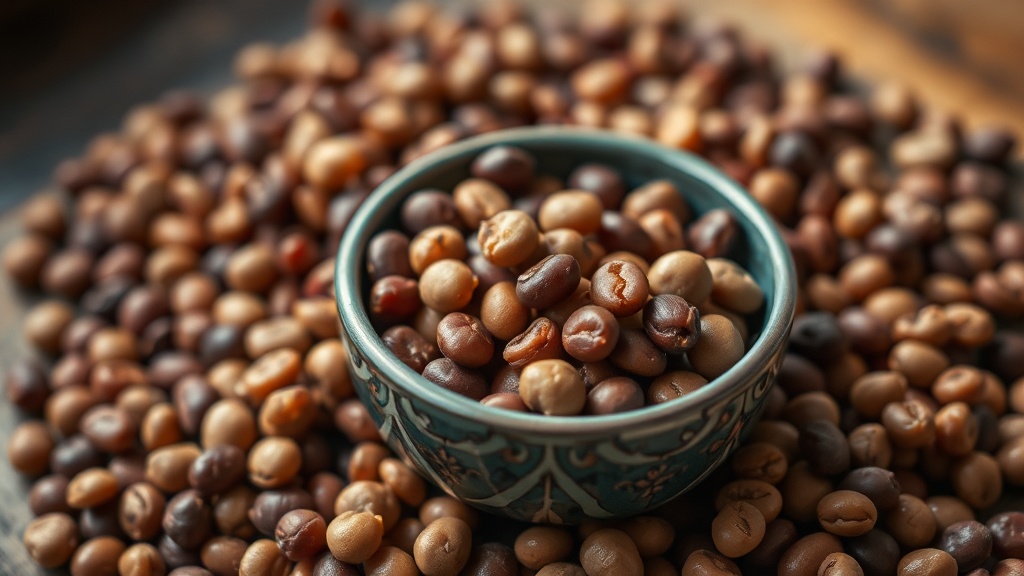
The Magic of Dried Beans: A Budget-Friendly Protein Powerhouse

Let’s get one thing straight: the wellness industry wants you to believe that high-quality protein only comes in a $14 jar of artisanal almond butter or a $25 tub of organic collagen peptides. They want you to think that "eating clean" requires a premium subscription to a lifestyle you can't afford. I’m here to tell you that’s a load of nonsense.
Before I transitioned from social work to budget advocacy, I spent years seeing families struggle to meet basic nutritional needs while being bombarded by marketing that promised "optimization" through expensive superfoods. If you want real, sustained energy and muscle-building protein without draining your bank account, you need to look toward the humble, dried bean. It is the ultimate nutritional heavy hitter, and it’s arguably the most undervalued tool in your pantry.
The Math of the Bean: Why Dried Wins Every Time
If you are still buying canned beans, I’m not judging you—I get it, convenience is king when you're exhausted. But if you’re looking to actually move the needle on your monthly grocery bill, we need to talk about the math. Canned beans are convenient, but you are paying a premium for the liquid, the metal, and the processing.
When you buy dried beans in bulk, the price per serving drops significantly. We aren't talking about a few cents; we are talking about a fundamental shift in your cost-per-gram of protein. For example, a single bag of dried black beans can often yield three to four times the volume of a standard can. This isn't just a "hack"; it's smart resource management.
Beyond the cost, there is a quality component. Dried beans allow you to control the sodium. Most canned beans are sitting in a brine that adds unnecessary salt to your diet, which can be an issue if you are also managing inflammation or blood pressure. When you cook them yourself, you control the seasoning, the texture, and the nutritional profile. It’s a way to ensure your diet aligns with science-backed pillars for a longer, healthier life, rather than just following whatever a TikTok influencer tells you to eat.
Nutritional Powerhouse Breakdown
Don't let the "cheap" label fool you. Dried beans are nutritional giants. Here is what you are actually getting in your bowl:
- Complex Carbohydrates: Unlike refined grains, beans provide slow-release energy, preventing the blood sugar spikes and crashes that leave you reaching for caffeine at 2:00 PM.
- High Fiber: Fiber is the unsung hero of gut health. It aids digestion and keeps you feeling full longer, which is essential for preventing expensive, impulse snack purchases.
- Plant-Based Protein: Whether it’s chickpeas, lentils, kidney beans, or navy beans, you are getting a dense source of amino acids.
- Micronutrients: You’re getting iron, folate, magnesium, and potassium—nutrients that are often expensive to supplement but incredibly cheap to eat in whole-food form.
The Logistics: How to Actually Cook Them (Without the Stress)
The biggest barrier to eating dried beans is the "time" factor. People think they have to spend hours hovering over a stove. That is a myth. You have two main paths: the soak and the slow cook.
1. The Overnight Soak (The Traditional Way)
This is the classic method. You put your beans in a large bowl, cover them with a few inches of water, and let them sit on the counter overnight. In the morning, drain the water, rinse them, and simmer them in fresh water or broth. This helps reduce the phytic acid and makes them easier to digest, reducing that "bloated" feeling some people get.
2. The "No-Soak" Method (The Realist's Way)
If you forgot to soak your beans, don't panic. You can simply simmer them for a longer period. If you have a slow cooker or a pressure cooker (like an Instant Pot), you can bypass the soaking phase entirely. This fits perfectly into a strategy of mastering the art of batch cooking. You can set your slow cooker in the morning, and by the time you're done with work, you have a massive pot of protein ready to go.
"Budgeting isn't about deprivation; it's about intentionality. Choosing dried beans over expensive pre-packaged protein isn't 'settling'—it's a strategic move to reclaim your financial agency."
Strategic Grocery Shopping: The Philly Grit Approach
In my years of social work, I learned that a budget isn't just a spreadsheet; it's a survival tool. To make this work, you need to shop with a specific mindset. Don't walk into the store looking for "specialty" items. Look for the heavy hitters in the bulk bins or the bottom shelves.
When you're navigating the aisles, remember that the most expensive items are usually at eye level. The high-margin, "wellness-branded" products are designed to catch your gaze. Instead, look down. Look for the large bags of lentils, the bulk bins of split peas, and the generic versions of dried beans. This is how you save money and cut through the noise of a consumer-driven diet.
A Sample Weekly Bean Strategy
To make this actionable, let's look at how you can integrate beans into a week without getting bored. The key is variety in seasoning, not variety in the actual ingredient.
- Monday/Tuesday: The Base. Cook a large pot of dried chickpeas. Use half for a Mediterranean-style salad with cucumbers and vinegar. Use the other half for a quick hummus or a roasted snack.
- Wednesday/Thursday: The Comfort. Cook a pot of black beans with garlic, onion, and cumin. Use this as a base for tacos, or mix it into a bowl of rice. This is where batch cooking grains becomes your best friend—mix the beans with cooked quinoa or brown rice for a complete protein profile.
- Friday: The Cleanup. Use the leftover lentils or beans to thicken a soup or stew. This prevents food waste, which is the silent killer of most household budgets.
Managing Seasonal Wellness
As we move through the seasons, our nutritional needs and our environments change. If you are dealing with the transition into spring, you might be feeling more sluggish or dealing with environmental changes. While beans provide the foundational nutrition, don't forget to manage your surroundings. For instance, if you find that seasonal changes are affecting your energy or comfort, you might want to look into spring allergy-proofing your home to ensure your recovery and rest are optimized.
Furthermore, if you are feeling the stress of a changing economy or local shifts, remember that your food budget is one of the few things you can control. Even as you read about how budgets are not neutral and local economic shifts impact your rent and childcare, focusing on low-cost, high-nutrition staples like dried beans gives you a small, much-needed win in a complex world.
The Bottom Line
Eating well does not require a massive bank account or a high-end membership to a boutique grocery store. It requires a shift in perspective. It requires moving away from the "instant gratification" of canned or pre-cooked foods and embracing the "slow and steady" value of dried legumes.
It might take an extra twenty minutes of soaking or an extra hour of simmering, but the payoff is two-fold: your body gets a massive influx of high-quality, fiber-rich protein, and your bank account gets a much-needed break. That is the real "magic" of dried beans. It’s not a miracle cure; it’s just good, old-fashioned math and a little bit of grit.
Go buy a bag of lentils. Your wallet—and your body—will thank you.