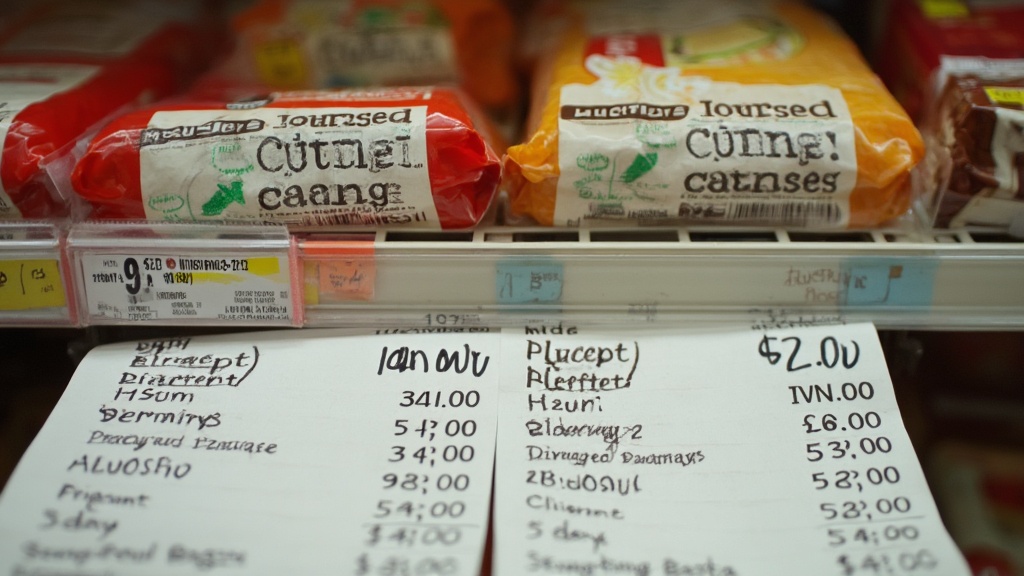
The Shrinkflation Trap: How Grocery Stores Are Charging You More for Less (And How to Catch Them)

The Setup
You walk into Aldi on a Tuesday. You grab what you think is your usual box of cereal. Same label. Same shelf position. Same price: $3.99. You feel good. You didn't get suckered.
Except you did.
The box now contains 9.75 ounces instead of 10.5 ounces. That's a 7% reduction in product. The price stayed the same. You just paid a 7.5% markup without noticing.
This is shrinkflation, and it's the grocery industry's favorite magic trick in 2026. It's how they raise prices without the sticker shock of a price increase. It's how they squeeze an extra $50-$100 a year out of your grocery budget while making you feel like you're getting a "deal."
And here's the thing: the unit price label is supposed to catch this. But most people don't read it.
Why Shrinkflation Is Happening RIGHT NOW
Two forces are colliding in early 2026:
- Tariffs on imported goods (which I broke down in my canned food post) are raising manufacturing costs for companies that rely on foreign packaging, ingredients, or equipment.
- Consumer price sensitivity is at a peak. People notice a $3.99 → $4.49 sticker price jump. They don't notice a 10.5oz → 9.75oz downsize.
So manufacturers are choosing the invisible price hike. Smaller package. Same price. Same shelf space. Same marketing. Different math.
According to GAO data and recent grocery audits, shrinkflation has accelerated 34% in the last 18 months. And it's targeting the staples you buy on autopilot: cereal, pasta, yogurt, cheese, peanut butter, granola bars, ice cream.
The Forensic Framework: How to Catch Shrinkflation
You have one weapon: the unit price.
Every grocery item has a small label that shows the price-per-ounce or price-per-unit. Most people ignore it. Don't. It's the only metric that tells you whether you're actually getting a deal.
Step 1: Know Your Baseline Unit Price
Before shrinkflation happens, you need to know what "normal" costs.
Example: Cheerios at Aldi
- 18 months ago: 10.5oz box, $3.99 → $0.38 per ounce
- Today: 9.75oz box, $3.99 → $0.41 per ounce
That 3-cent difference per ounce is a 7.9% price increase disguised as a normal purchase.
Action:** Write down the unit price of your 5 most-bought items. Use your phone. Take a photo of the shelf label. Keep it in a notes app. Check it every month.
Step 2: Spot the Package Downsizing Red Flags
Shrinkflation doesn't happen randomly. It follows patterns:
- Round number changes: 16oz → 14oz, 12-count → 10-count, 5lb → 4.5lb. (Companies avoid weird numbers like 13.2oz because it looks obviously downsized.)
- Seasonal timing: Post-holiday (January-February), post-New Year sales season. When you stop paying attention.
- Brand consolidation: When a popular brand gets bought by a larger company, watch the package size. Acquisition shrinkflation is real.
- "New and Improved" rebranding: If the label changes but the product looks the same, the weight probably dropped. Check it.
Step 3: The Unit Price Comparison Matrix
Here's a real-world example from my last Aldi run (Tuesday, Feb 25, 2026):
| Product | Package Size | Price | Unit Price | Shrinkflation Alert? |
|---|---|---|---|---|
| Simply Nature Granola | 12oz (was 14oz) | $4.49 | $0.374/oz | ✅ YES — 14% downsized |
| Aldi Peanut Butter | 16oz (unchanged) | $2.29 | $0.143/oz | ✅ NO — stable |
| Barilla Pasta | 13oz (was 16oz) | $1.29 | $0.099/oz | ✅ YES — 19% downsized |
| Chobani Yogurt (4-pack) | 4 × 5.3oz (was 4 × 6oz) | $4.99 | $0.236/oz | ✅ YES — 12% downsized |
Notice something? The downsizing is hitting premium and "health-focused" brands HARDER than budget brands.
Why? Because people buying granola and Greek yogurt are less price-sensitive. They're buying the label, not the math. So manufacturers squeeze them first.
The Math: What Shrinkflation Costs You Per Year
Let's say you buy 5 staple items weekly, and shrinkflation hits 3 of them at an average 10% package reduction:
- Cereal: 10.5oz → 9oz (14% reduction) = $0.19/week extra = $9.88/year
- Pasta: 16oz → 13oz (19% reduction) = $0.12/week extra = $6.24/year
- Yogurt: 4 × 6oz → 4 × 5.3oz (12% reduction) = $0.18/week extra = $9.36/year
Total: $25.48/year from just 3 items. Scale that to your entire grocery basket, and you're looking at $80-$150/year in invisible price hikes.
That's a car payment. That's a month of streaming services. That's money you didn't even know you lost.
The Defense: How to Beat Shrinkflation
1. Switch to Store Brands (Before They Shrink)
Store brands are shrinking too, but they're starting from a lower price point. The unit price is still usually better.
Example:
- Barilla Pasta (13oz): $0.099/oz
- Aldi Pasta (12oz): $0.079/oz
Aldi wins by 20% even after shrinkflation. Store brands are your fallback when premium brands get too expensive.
2. Buy in Bulk (But Check the Unit Price First)
Costco and bulk bins look cheap. They're not always. A 5lb bag of rice at Costco might have a higher unit price than a 2lb bag at Aldi if Costco markup is aggressive that month.
Always compare unit prices, even at "bulk" retailers.
3. Rotate Between Brands
Shrinkflation happens at different times for different brands. If Barilla gets hit, switch to Aldi pasta for a month. If Aldi granola gets hit, grab the Kirkland version at Costco. Keep manufacturers honest by voting with your dollars.
4. Buy Frozen and Canned (They Don't Shrink As Much)
Here's a weird truth: frozen vegetables and canned beans are harder to shrink because the package size is standardized by weight. A 10oz bag of frozen broccoli is 10oz because that's how the freezer equipment works. Manufacturers can't easily make it 9oz without retooling.
Frozen and canned are your shrinkflation-resistant staples.
The Bottom Line
Shrinkflation is a 7-15% invisible price hike, and it's happening right now in your grocery store. The unit price is your only defense. Check it. Write it down. Compare it monthly. That 3-cent difference per ounce is the difference between a real deal and a con.
You didn't survive a Philly winter by being dumb about money. Don't start now. The math is right there on the label. Read it.