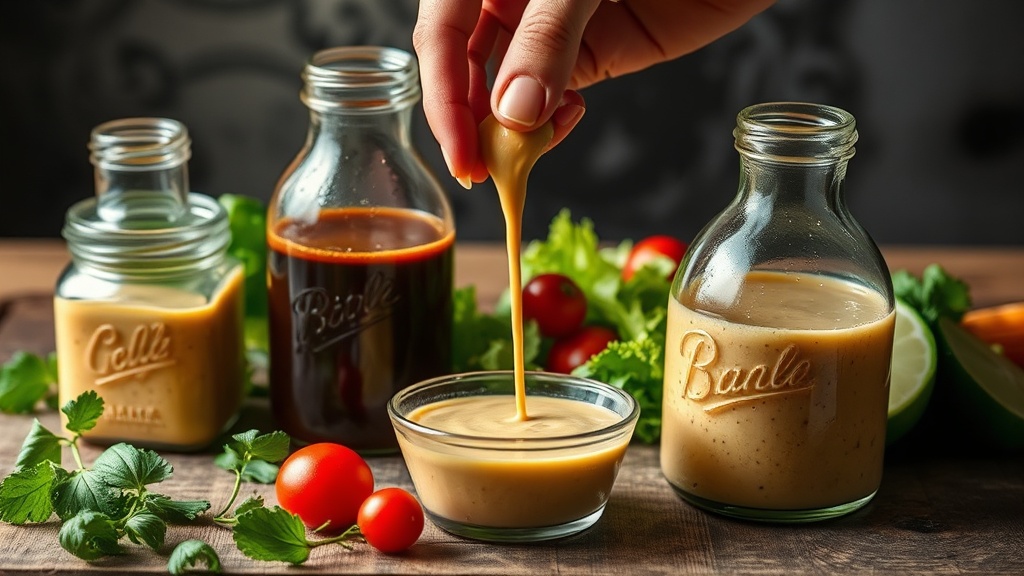
Stop Buying Pre-Made Salad Dressings and Make Your Own

You're going to learn how to build a professional-grade pantry of dressings and vinaigrettes using basic oils, acids, and seasonings. This isn't about fancy emulsions or expensive imported vinegars; it's about understanding the math of flavor so you can stop throwing $6.00 a bottle at a jar of mediocre ranch or balsamic vinaigrette in the grocery aisle.
Let's be real: the bottled stuff is a scam. You're paying for the plastic, the marketing, and a lot of soybean oil and high fructose corn syrup that's doing nothing for your health. Most of those "healthy" dressings are actually just liquid sugar and preservatives. When you make your own, you control the quality of the fat and the amount of salt, and more importantly, you save a massive amount of money over the course of a year.
Why Is Store-Bought Dressing So Expensive?
It comes down to the shelf-life and the branding. Manufacturers use cheap, highly processed oils—think canola or soybean oil—and stabilize them with additives so they can sit on a shelf for twelve months without separating. When you walk into the aisle and see a "premium" vinaigrette, you're paying a markup that's often 300% higher than the cost of the actual ingredients. It's a way to squeeze more profit out of a low-cost product.
A single bottle of high-end vinaigrette can easily cost $7.00. If you use that on a salad three times a week, that's nearly $1,000 a year spent on something you could make in a jar for pennies. I've seen people treat salad dressing like a luxury item, but it shouldn't be. It's just an emulsion of fat and acid. That's it. You don't need a culinary degree to get it right; you just need a basic ratio.
How Do You Make a Basic Vinaigrette at Home?
The secret to a perfect vinaigrette is the 3:1 ratio. That means three parts oil to one part acid. This is the foundation for almost every dressing you'll ever need. If you master this ratio, you can change the flavor profile infinitely by swapping out the variables.
- The Oil: Use a neutral oil like avocado oil or a decent olive oil. If you're on a tight budget, even a high-quality vegetable oil works—just don't use the cheap stuff that tastes like cardboard.
- The Acid: This is where the brightness comes from. You can use apple cider vinegar, red wine vinegar, lemon juice, or even balsamic.
- The Emulsifier: This is the glue. A teaspoon of Dijon mustard or a bit of honey helps the oil and vinegar stay together instead of separating immediately.
Start with 3 tablespoons of oil and 1 tablespoon of acid. Add a pinch of salt, a crack of black pepper, and a teaspoon of mustard. Shake it in a small mason jar. That's your base. From there, you can go anywhere. Want it creamy? Add a dollop of Greek yogurt. Want it spicy? Throw in some red pepper flakes. This is how you actually build a kitchen that works for you.
Can You Use Homemade Dressings for Cooking?
Absolutely. One of the biggest mistakes people make is thinking dressings are only for cold greens. A lemon-tahini dressing or a basic balsamic vinaigrette is incredible as a marinade for chicken or roasted vegetables. Using your homemade dressings as a finishing sauce for cooked proteins is a smart way to add flavor without buying more specialized products.
For example, if you've made a bright lemon and garlic vinaigrette, don't just use it on a salad. Drizzle it over roasted salmon or even sautéed kale. It adds a punch of acidity that cuts through the richness of the fat. It's a way to stretch your ingredients and make a simple meal feel intentional. You can find great nutritional breakdowns for various oils and acids on sites like Healthline to see how your choices affect your macro-nutrients.
The Essential Pantry Checklist
To stop the cycle of overspending, you need a specific set of tools and ingredients. You don't need a pantry full of specialized products; you just need the basics. If you have these, you can make almost any dressing in the world.
| Ingredient Type | Budget-Friendly Options | Flavor Profile |
|---|---|---|
| Oils | Canola, Sunflower, Extra Virgin Olive Oil | Neutral to Rich |
| Acids | Apple Cider Vinegar, White Vinegar, Lemon Juice | Sharp, Bright, Tart |
| Sweeteners | Honey, Maple Syrup, Agave | Smooth, Mellow |
| Thickeners | Dijon Mustard, Tahini, Greek Yogurt | Creamy, Savory |
If you want to check the nutritional value of your pantry staples to ensure you're staying on track with your health goals, the USDA FoodData Central is a reliable, free resource. It’s better to look at the data than to trust the labels on the back of a bottle.
Stop letting the grocery store dictate your menu with their overpriced, mediocre products. When you realize that a jar of oil and a bottle of vinegar are all you really need to create hundreds of different flavors, the whole game changes. You'll save money, you'll eat better, and you won't be a sucker for the fancy packaging anymore. Just grab a jar, shake it up, and move on with your life.