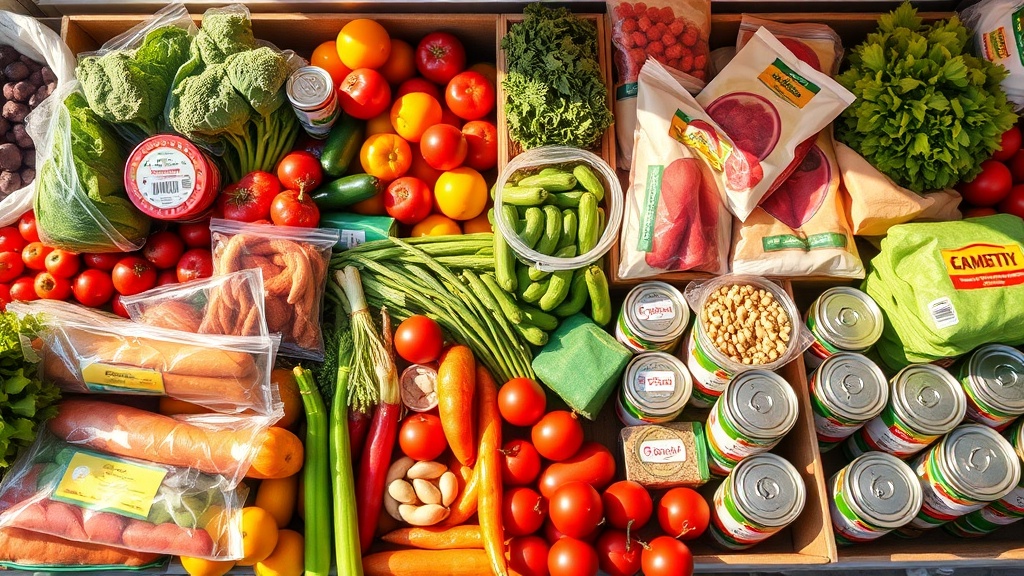
How to Shop a Spring Farmer’s Market on a Tight Budget

Ever walked past a bustling spring farmer’s market and felt both excitement and dread because your wallet’s feeling the pinch? I’ve been there — the colors, the aromas, the promise of fresh, wholesome food, and then the reality check when the price tags start adding up. Let’s flip that script.
Spring is prime time for local produce, but with grocery inflation still climbing, many assume the market is a luxury you can’t afford. In reality, a savvy market run can slash your weekly food spend while boosting nutrition. Below is my no‑BS, data‑driven playbook for turning the farmer’s market into a budget powerhouse.
What should I bring to a farmer’s market to stay on budget?
First, come prepared. A simple spreadsheet (or even a paper list) with unit‑price columns lets you jot down price‑per‑pound as you shop. Bring cash in small denominations — many vendors give a discount for cash. And don’t forget a sturdy reusable bag and a cooler pack; it prevents you from buying extra plastic containers that eat into your budget.
How can I compare prices without unit‑price tags?
Unlike supermarkets, markets rarely display unit prices. Here’s my quick method:
- Ask for the weight. Vendors are happy to weigh produce on the spot.
- Do the math. Divide the total price by the weight — it’s that simple. If the math feels heavy, use the Unit Price Masterclass calculator I built for grocery aisles — it works just as well on a phone.
- Benchmark against your freezer. I often compare fresh carrots to the frozen bag I keep on hand (see my Freezer Savings Account post). If the fresh price per pound exceeds the frozen unit price, consider buying frozen instead.
Which budget‑friendly items give the most nutrition per dollar?
Not all produce is created equal. My data‑driven top‑five for spring:
- Carrots. One of the cheapest beta‑carotene powerhouses — a 2‑lb bag often under $2.
- Spinach. Fresh bundles can beat frozen when on sale; watch the unit price.
- Potatoes. Versatile, calorie‑dense, and usually $0.60 per pound.
- Eggs. The protein budget plan shows eggs outrank meat on a cost‑per‑gram basis.
- Canned beans. Not technically fresh, but many vendors sell bulk dried beans at market rates that beat the grocery aisle.
How do I store market finds to avoid waste and save money?
Fresh produce can wilt fast. Here’s my three‑step storage hack:
- Clean later. Wash only what you’ll use that day; excess moisture speeds spoilage.
- Use a veggie crisper. Line it with a paper towel to absorb excess humidity.
- Freeze surplus. Blanch greens, slice carrots, or puree tomatoes and freeze in portion‑size bags. Your freezer becomes a second pantry — see my Freezer Savings Account guide for exact ratios.
Quick Market Checklist
- Bring a printed or digital price‑per‑pound sheet.
- Carry cash for instant discounts.
- Ask vendors for weight before you buy.
- Prioritize carrots, spinach, potatoes, eggs, and bulk beans.
- Pack a cooler pack for perishable items.
- Plan a freezer storage routine right after you get home.
Takeaway
The farmer’s market isn’t a luxury—it’s a budget tool if you treat it like a grocery aisle with unit‑price math, a pre‑made list, and a freezer strategy. Walk in with numbers, leave with fresh, nutrient‑dense foods that cost less than the canned aisle. Next time you see those bright stalls, remember: the real bargain is in the math, not the marketing.
Related Reading
- The Real Cost of Protein: Price‑Per‑Gram Ranking — Discover why beans and eggs beat steak on a dollar‑per‑protein basis.
- Dollar Store Grocery List 2026 — Pair market finds with ultra‑cheap pantry staples.
- Pre‑Cut Produce Cost Reality Check — Learn when it’s worth paying for convenience.