How to Meal Prep Healthy Lunches for the Week on a $30 Budget

What This Post Covers (And Why $30 Is the Magic Number)
This guide breaks down exactly how to prep five healthy, filling lunches for an entire week—breakfast and dinner not included—on a strict $30 budget. That's $6 per day, $1.20 per meal. The math works. The meals won't leave you hungry at 3 PM. And you won't be eating the same sad chicken breast every single day.
Here's why this matters: the average American spends $11 per day on lunch alone, according to Bureau of Labor Statistics data. That's $55 a week. Cut that to $6, and you're looking at nearly $2,500 in savings per year. That's rent money. Car payment money. Emergency fund money. The "wellness industry" wants you to believe healthy eating requires $15 cold-pressed juices and organic everything. It doesn't. Smart shopping beats expensive ingredients every time.
The strategy here focuses on bulk buying, strategic protein rotation, and flavor-building techniques that make cheap ingredients taste expensive. No meal kits. No specialty stores. Just Aldi, Walmart, or whatever discount grocery lives near you.
What Groceries Should You Buy for a $30 Weekly Lunch Prep?
Start with eggs, dried beans, seasonal vegetables, and whole grains. These four categories form the backbone of budget meal prep—high protein, high fiber, and dirt cheap when bought smart.
Here's a sample shopping list that hits $30 at most U.S. grocery stores (prices based on Aldi and Walmart averages as of 2024):
| Ingredient | Quantity | Est. Cost |
|---|---|---|
| Eggs (large) | 1 dozen | $2.50 |
| Dried black beans | 2 lbs | $3.00 |
| Brown rice | 2 lbs | $2.00 |
| Chicken thighs (bone-in) | 3 lbs | $6.00 |
| Seasonal vegetables (mix) | 5 lbs | $7.50 |
| Onions | 3 lbs | $2.00 |
| Garlic | 1 bulb | $0.75 |
| Canned tomatoes | 2 cans (28 oz) | $2.00 |
| Spices/condiments (pantry staples) | — | $4.25 |
| Total | — | $30.00 |
The catch? You probably own garlic powder, salt, pepper, and cooking oil already. If not, grab a $1 garlic powder and $3 olive oil bottle—yeah, it pushes you to $34 this week, but those last for months.
Worth noting: chicken thighs beat chicken breasts on price and flavor. Dark meat stays juicy when reheated. Breast meat turns to rubber in the microwave. This isn't about being fancy—it's about eating food that doesn't punish you on Thursday.
How Do You Prep Five Different Meals Without Food Waste?
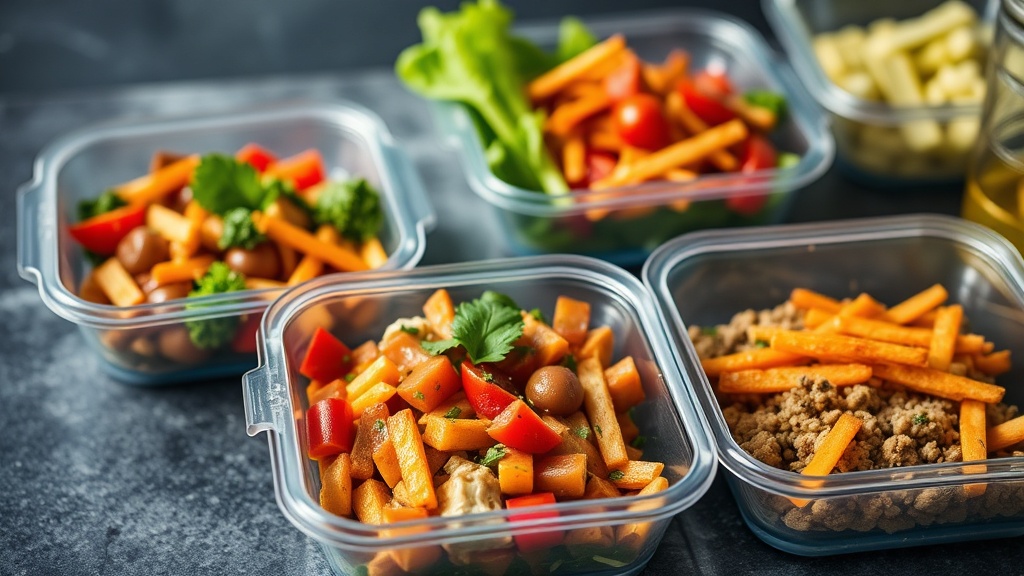
Use a component system instead of pre-assembled meals. Cook proteins, grains, and vegetables separately, then mix and match throughout the week. This prevents the Sunday night dread of staring at five identical containers.
Here's the breakdown:
Sunday Prep (2 Hours Max)
Proteins: Hard-boil 6 eggs. Slow-cook or pressure-cook 2 lbs of dried black beans (yields about 6 cups cooked—freeze half for next week). Roast all 3 lbs of chicken thighs with salt, pepper, and paprika. Shred the meat, save the bones for stock.
Grains: Cook the full 2 lbs of brown rice. It keeps fine all week.
Vegetables: Roast a sheet pan of mixed vegetables with olive oil and salt. Dice raw onions and store in a container. Prep takes about 90 minutes if you work in parallel—beans on the stove, chicken in the oven, rice in a separate pot.
The Mix-and-Match Matrix
With these components, you can build five distinct lunches:
- Monday: Rice + black beans + roasted vegetables + hot sauce (vegetarian, high fiber)
- Tuesday: Shredded chicken + rice + salsa from those canned tomatoes + raw onions (Mexican-inspired bowl)
- Wednesday: Hard-boiled eggs (2) + black beans + roasted vegetables + olive oil drizzle (Mediterranean-ish)
- Thursday: Chicken + beans + tomatoes simmered into a stew situation, served over rice (hearty, warm)
- Friday: Fried rice—scramble one egg, toss with rice, leftover chicken bits, and any remaining vegetables (use it all up)
Each meal hits roughly 500-600 calories with 25-35g protein. That's enough to keep you full through the afternoon without the 3 PM crash. The fiber from beans and vegetables slows digestion. The protein stabilizes blood sugar.
How Do You Keep Cheap Meals From Tasting Boring?
Acidity, texture contrast, and strategic use of condiments. Bland food comes from fear of salt and reliance on single cooking methods. Here's the thing—most budget meal prep fails because everything gets roasted and nothing gets seasoned properly.
Fix it with these cheap flavor bombs:
- Hot sauce. Frank's RedHot, Cholula, or store-brand sriracha—$2-3 per bottle, lasts months. Capsaicin also boosts satiety signals. Win-win.
- Lemon juice or vinegar. A $2 bottle of white vinegar or lemon juice brightens everything. Splash it on beans. Toss roasted vegetables with it. Acid cuts heaviness.
- Toast your spices. Before adding cumin, paprika, or chili powder to dishes, bloom them in hot oil for 30 seconds. This wakes up dormant flavor compounds. The difference is massive.
- Texture variety. Combine soft (beans, cooked rice) with crunchy (raw onions, toasted seeds if you have them). Monotexture meals feel like punishment.
That said, don't sleep on the umami boost from those canned tomatoes. Simmer them with garlic and onion powder, and you've got a sauce that tastes like it took hours. It didn't. It took 15 minutes while the chicken roasted.
What About Storage, Reheating, and Food Safety?
Glass containers beat plastic for reheating—no chemical leaching, no tomato stains. The FDA recommends keeping cooked food at 40°F or below and eating within 3-4 days for optimal safety.
Here's the workaround for week-long prep: freeze Wednesday, Thursday, and Friday meals on Sunday. Move them to the fridge Tuesday night. They thaw safely and taste fresher than week-old refrigerated chicken. Beans and rice freeze beautifully. Vegetables get softer but remain edible.
For reheating, add a tablespoon of water before microwaving. Steam revives dried-out rice and chicken. Cover with a damp paper towel. Heat to 165°F internal temperature if you're paranoid (and with budget chicken, a little paranoia doesn't hurt).
Can You Really Get Enough Protein on This Budget?
Absolutely. The USDA recommends 0.36g protein per pound of body weight for sedentary adults—about 65g for a 180-pound person. These meals deliver 25-35g each, which puts you at 125-175g for lunch alone. That's more than enough, even for active folks.
The protein breakdown per meal:
- 2 eggs = 12g protein
- 1 cup cooked black beans = 15g protein
- 4 oz chicken thigh = 28g protein
- 1 cup cooked brown rice = 5g protein
Combine any two protein sources (beans + eggs, chicken + rice, etc.) and you're covered. The beans deserve special mention—they're the most underrated protein source in American cooking. A 2-pound bag costs less than a single chicken breast and delivers 13 servings of 15g protein each. That's 195g protein for $3.
Compare that to protein bars. A Quest Bar costs $2-3 and delivers 20g protein. Two cups of home-cooked black beans costs $0.40 and delivers 30g. The math isn't close.
Real Talk: What If You Hate Beans?
Swap the $3 bean budget for frozen tilapia, canned tuna, or more eggs. A 4-pound bag of frozen tilapia at Walmart runs about $10. That covers protein for two weeks if you stretch it. Canned tuna—StarKist chunk light in water—costs about $1 per can with 20g protein.
The point isn't to follow this exact list. The point is to understand the ratios: roughly 40% of your budget on protein, 30% on produce, 20% on grains, 10% on flavor boosters. Adjust for preferences, dietary restrictions, or what's on sale.
Worth noting: seasonal vegetables change the math dramatically. Summer squash, zucchini, and tomatoes hit $0.99 per pound in July. Winter root vegetables—carrots, turnips, potatoes—stay cheap year-round. Shop the sales flyer. Build your week around whatever's moving.
Troubleshooting Common Meal Prep Failures
"My food tastes like the fridge." You're not cooling it properly. Hot food goes directly into shallow containers in the fridge—don't let it sit out for two hours. The danger zone (40°F-140°F) is where bacteria throw a party.
"I'm hungry two hours after eating." Add more beans or eggs. Complex carbs and protein trigger lasting fullness. Simple carbs (white rice, bread) spike blood sugar and crash it. Brown rice helps. Beans help more.
"I can't eat the same thing five days in a row." Then don't. The component system exists for this reason. Make Monday and Tuesday identical, Wednesday and Thursday different, Friday a wildcard. Or freeze half and prep a different batch midweek.
"This takes too long." The first week, yeah—it might take 3 hours. By week three, you'll knock it out in 90 minutes while watching Netflix. Efficiency comes from repetition. You'll learn your grocery store layout. You'll memorize cook times. It gets faster.
"The goal isn't perfection. The goal is spending $30 instead of $55 while eating food that doesn't make you feel like garbage. Some weeks you'll nail it. Some weeks you'll grab a $3 slice of pizza on Wednesday because life happens. That's fine. This isn't about moral purity—it's about better averages over time."
Start this Sunday. Buy the beans. Roast the chicken. Build your containers. By next Friday, you'll have an extra $25 in your pocket and five fewer decisions to make during the workday. That's the real value—not just the money saved, but the mental bandwidth preserved for things that actually matter.
Steps
- 1
Plan Your Menu and Create a Shopping List
- 2
Shop Smart at Discount Grocery Stores
- 3
Batch Cook Proteins, Grains, and Vegetables