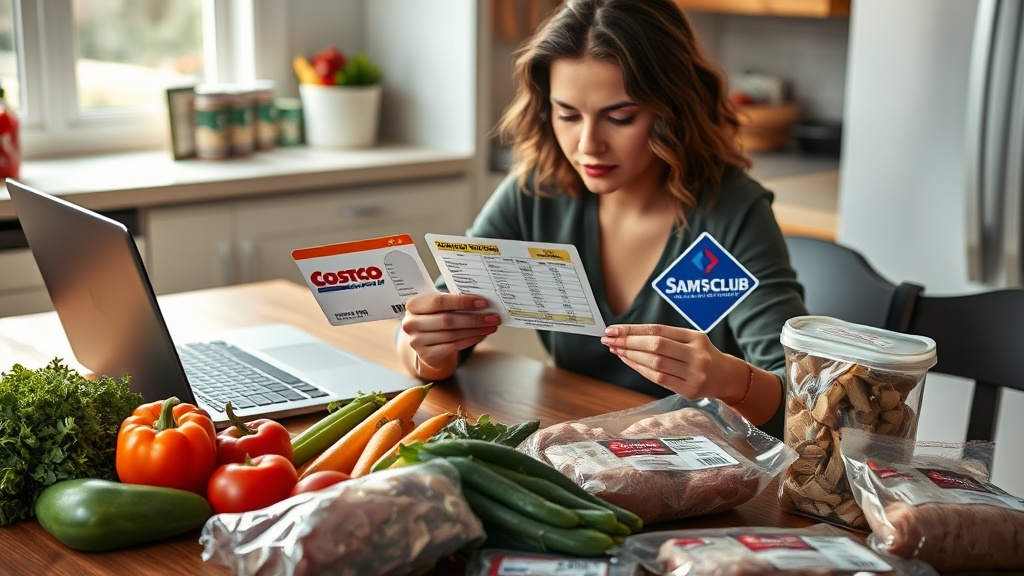
Costco vs Sam’s Club: Which Bulk Grocery Club Saves You More in 2026

Hook: What if you could shave $150 off your annual grocery bill just by picking the right warehouse club?
Which club costs less to join, and does the price tag reflect the savings?
Both Costco and Sam’s Club raised membership fees in 2026—Costco’s Gold Star is $65 a year and its Executive tier $130, while Sam’s Club offers a basic $50 membership and a Plus tier around $110. The raw fee difference is clear, but the real question is whether the extra spend translates into lower per‑item costs for the budget‑conscious shopper.
How do unit‑price savings compare between Costco and Sam’s Club?
Unit‑price math is the backbone of my Unit‑Pricing Masterclass. At Costco, bulk packs of chicken thighs often sit under $2 per pound, while Sam’s Club’s bulk chicken averages $2.20‑$2.40 per pound. For staples like rice, beans, and frozen vegetables, the price gap shrinks to a few cents, but the larger the package, the more Costco’s economies of scale shine.
What hidden fees or perks should you factor into the comparison?
Costco’s Executive Membership throws in a 2 % cash‑back rebate on qualifying purchases—effectively a $1.30 return on every $65 spent, plus travel discounts and extra insurance coverage. Sam’s Club’s Plus tier adds free shipping on most online orders and a $10 /month “fuel” discount at participating stations. If you already use a lot of online grocery delivery, Sam’s Club’s free‑shipping perk can offset the membership fee.
Can you still save big without a membership?
Absolutely. My Dollar Store Grocery List 2026 proves that strategic shopping at discount retailers can keep your weekly spend under $40 without any club fees. However, when you regularly buy meat in bulk or need large quantities of pantry staples, the per‑unit savings from a club often outweigh the membership cost after you hit roughly $800 in annual spend.
What practical steps can you take to maximize club savings?
- Track your spend. Use a simple spreadsheet (see my price‑comparison spreadsheet guide) to log every club purchase. Once you’ve hit the break‑even point—about $600‑$700 for Costco Gold Star or $500 for Sam’s Club basic—you’re truly saving.
- Buy “just‑in‑time” bulk. Freeze meat in portion‑size bags and rotate stock to avoid waste, a tip I cover in Freezer Savings Account.
- Leverage seasonal promotions. Both clubs run “stock‑up” events around holidays. Pair them with my Grocery Price Outlook to anticipate price spikes.
Takeaway: Which club should you join?
If you spend at least $800 a year on bulk meat, dairy, and pantry staples, Costco’s Executive Membership usually pays for itself within 6‑8 months thanks to the cash‑back rebate and lower meat unit prices. If you’re a lighter bulk buyer who prefers online convenience and fuel discounts, Sam’s Club Plus offers a lower entry fee and enough perks to break even at roughly $500 of annual spend.
In short, match your shopping habits to the club’s strengths, track your spend, and let the numbers do the talking.